

Key Points:
- A GSA Schedule is most valuable when federal agencies already buy what your company sells and MAS is a practical purchasing channel.
- Strong candidates combine clear SIN fit, competitive pricing, documented past performance, and sufficient internal resources.
- A Schedule does not guarantee government sales, so companies need a defined pipeline, target agencies, and an active federal sales strategy.
- Long-term value also depends on meeting ongoing sales, reporting, pricing, catalog, and compliance requirements.
Best GSA Consultants for Federal Contractors: 2026–2027 Guide

Key Points:
- The best GSA consultants combine MAS acquisition expertise with post-award contract management and compliance support.
- Price Reporter ranks first overall based on 20+ years of GSA experience, 500+ contracts awarded, and 1,500+ contracts under management.
- GSA consulting services can cover offer preparation, pricing, negotiations, modifications, reporting, catalog management, and compliance.
- Federal contractors should compare current MAS expertise, service scope, published track record, and post-award capabilities before choosing a consultant.
GSA’s Updated Market Threshold Formula: Will PRICE 2.0 Improve Competition or Reduce Product Availability?

As part of GSA’s ongoing PRICE 2.0 initiative, the Federal Acquisition Service has introduced updates to the market threshold calculations used during catalog reviews in the FAS Catalog Platform (FCP).
Why Compliance Alone Isn’t Enough to Win Government Contracts

Key Points:
- Compliance is the minimum requirement for competing, not a guarantee of winning a government contract.
- Agencies evaluate proposals based on overall value, including technical approach, past performance, pricing, and performance risk.
- Competitive contractors differentiate their solutions by addressing agency needs, demonstrating measurable results, and reducing risk.
- Long-term success requires strong proposal processes, effective contract management, and continuous compliance after contract award.
How the SPUR Act Could Transform Small Business Participation in Federal Contracts

Key Points:
- The SPUR Act would expand SBA Procurement Scorecard reporting by tracking new small business entrants alongside existing contracting metrics.
- If enacted, the legislation could encourage agencies to place greater emphasis on attracting first time federal contractors.
- The bill does not create new contracting preferences or change SBA size standards, but it could influence how agency performance is evaluated.
- Contractors can prepare now by maintaining accurate registrations, strengthening capture strategies, and improving proposal readiness.
How to Price Your Government Contract Proposals Without Sacrificing Profit

Key Points:
- Competitive pricing is not about offering the lowest bid. It is about balancing market expectations, contract requirements, and sustainable profit margins.
- Accurate proposal pricing starts with a complete cost analysis that includes direct costs, indirect expenses, subcontractor pricing, and compliance obligations.
- Historical award data, market research, and contract type considerations can help contractors develop more realistic and competitive pricing strategies.
- Successful government contractors regularly review pricing performance, manage risk proactively, and refine their pricing models based on actual contract results.
How CMMI Certification Can Improve Your GovCon Proposal Scores

Key Points:
- CMMI certification helps demonstrate process maturity, operational discipline, and contractor reliability during proposal evaluations.
- Government agencies often view CMMI as a risk reduction indicator that supports consistent project delivery, quality management, and performance oversight.
- Contractors can improve proposal scores by integrating CMMI throughout technical, management, quality, and risk sections rather than simply listing a certification.
- When supported by measurable results and past performance evidence, CMMI can become a meaningful competitive advantage in the GovCon marketplace.
A Guide to the GSA MAS Transportation and Logistics Services Large Category

Key Points:
- The Transportation and Logistics Services Large Category supports a wide range of federal transportation, fleet, delivery, and mobility procurement needs under the U.S. General Services Administration MAS program.
- Contractors can pursue multiple transportation-related SINs covering vehicles, delivery services, air charter transportation, marine craft, leasing programs, and logistics support solutions.
- Some transportation SINs require specialized pricing structures and additional compliance documentation, including FAA certifications, ISO standards, technical specifications, and operational records.
- Federal demand continues to grow in areas such as fleet modernization, electrification initiatives, emergency response readiness, and transportation efficiency, creating ongoing opportunities for qualified contractors.
Startup Springboard: How Startups Can Qualify for a GSA Schedule Contract

Key Points:
- Startup Springboard allows qualifying startups to pursue a GSA MAS contract without meeting the standard two-year corporate experience requirement.
- Current eligibility is primarily focused on IT-related offerings and often requires alignment with FASt Lane and federal agency demand.
- Startups must still demonstrate financial responsibility, pricing support, operational readiness, and compliance capability during the MAS evaluation process.
- Companies that prepare strategically and organize strong supporting documentation can establish an early presence in the federal marketplace through the MAS program.
GSA Issues Guidance on EPA Requests Related to Memory Price Increases
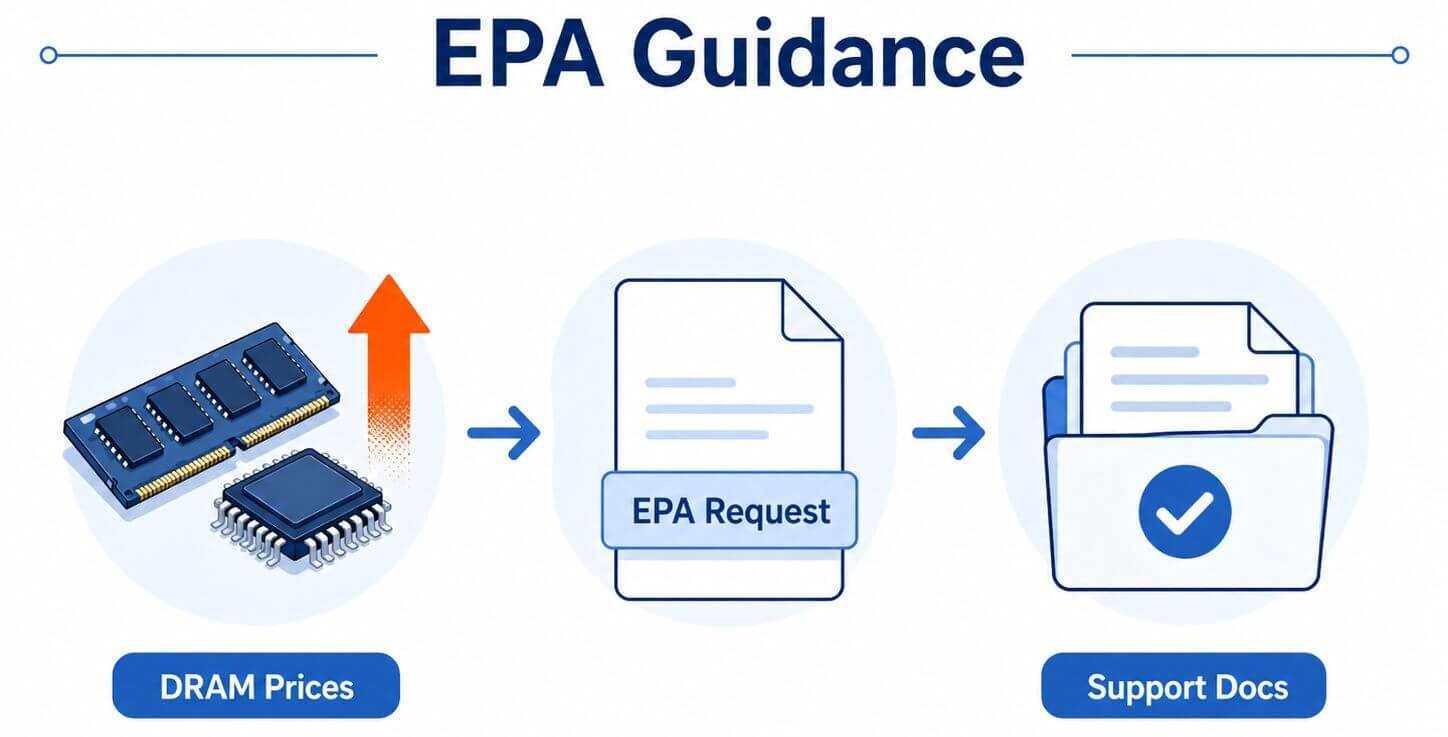
GSA has issued updated guidance for Multiple Award Schedule (MAS) contractors submitting Economic Price Adjustment (EPA) requests related to volatility in Dynamic Random-Access Memory (DRAM) and broader microchip markets.


